



In 2026 the threshold for successful startup has never been higher. With the explosion of AI-native platforms and the shift toward vertical-specific SaaS, a brilliant business model is no longer enough. To survive the post-seed, your gotta have your technical velocity and product-market fit figured out from the get-go.
For founders dealing with those challenges, startup accelerators provide the necessary infrastructure to scale. When founders ask what are the best startup accelerators, they aren't just looking for capital — they're looking for an ecosystem that fosters rapid technical growth.
This guide evaluates the best startup accelerators for early stage ventures worldwide as of March 2026. We’ve analyzed Silicon Valley mainstays, emerging regional powerhouses in the DACH and MENA regions, and specialized programs designed to move your product from a funded MVP to a scalable, enterprise-grade platform.
Key takeaways: scaling beyond the demo day
- The 2026 funding benchmark: top-tier accelerators like Y Combinator have shifted the standard to a $500,000 investment, prioritizing startups building agentic workflows and sovereign AI infrastructure.
- Vertical specialization > brand name: for startups in legacy sectors like ConstructionTech or MarTech, vertical-specific programs (e.g., Shadow Ventures or XRC) often provide more value than generalist giants by offering direct access to enterprise "Design Partners."
- The "Day 121" velocity crash: 60% of startups lose momentum immediately after their accelerator program ends due to a hiring lag. Successful founders mitigate this by using a hybrid team model—keeping a lean core team and augmenting with a "senior squad" for rapid execution.
- Auditing AI infrastructure debt: in 2026, investors prioritize technical resilience. It is critical to perform a technical debt audit post-program to move from a "brittle" MVP to a scalable, audit-ready enterprise architecture.
- Regional hubs for global scaling: beyond Silicon Valley, hubs in Singapore, the DACH region, and the UAE (Hub71) are offering aggressive equity-light incentives, making them the preferred gateway for startups targeting international platform modernization.
Best startup incubators: comparison table
Top startup accelerators for new companies: the Silicon Valley giants
Even as the startup ecosystem decentralizes, these top startup accelerators remain the gold standard for prestige, network density, and capital. However, in 2026, the criteria for entry have shifted from "growth at all costs" to "sustainable technical resilience."
1. Y Combinator (YC)
YC remains one of the top startup accelerators for early stage funding. As of March 2026, their standard deal is a $500,000 investment: $125,000 for a fixed 7% equity and $375,000 on an uncapped MFN (Most Favored Nation) SAFE.
- The 2026 pivot: YC has doubled down on its "AI-First" batches, prioritizing startups building agentic workflows and sovereign infrastructure.
- The technical gap: with the mandatory in-person residency in San Francisco, founders often find their $500k runway consumed by Bay Area overhead. This is where lean technical execution becomes critical; many YC teams now use external "senior squads" to maintain development capacity while the founders focus on the intense YC fundraising circuit.
2. Techstars
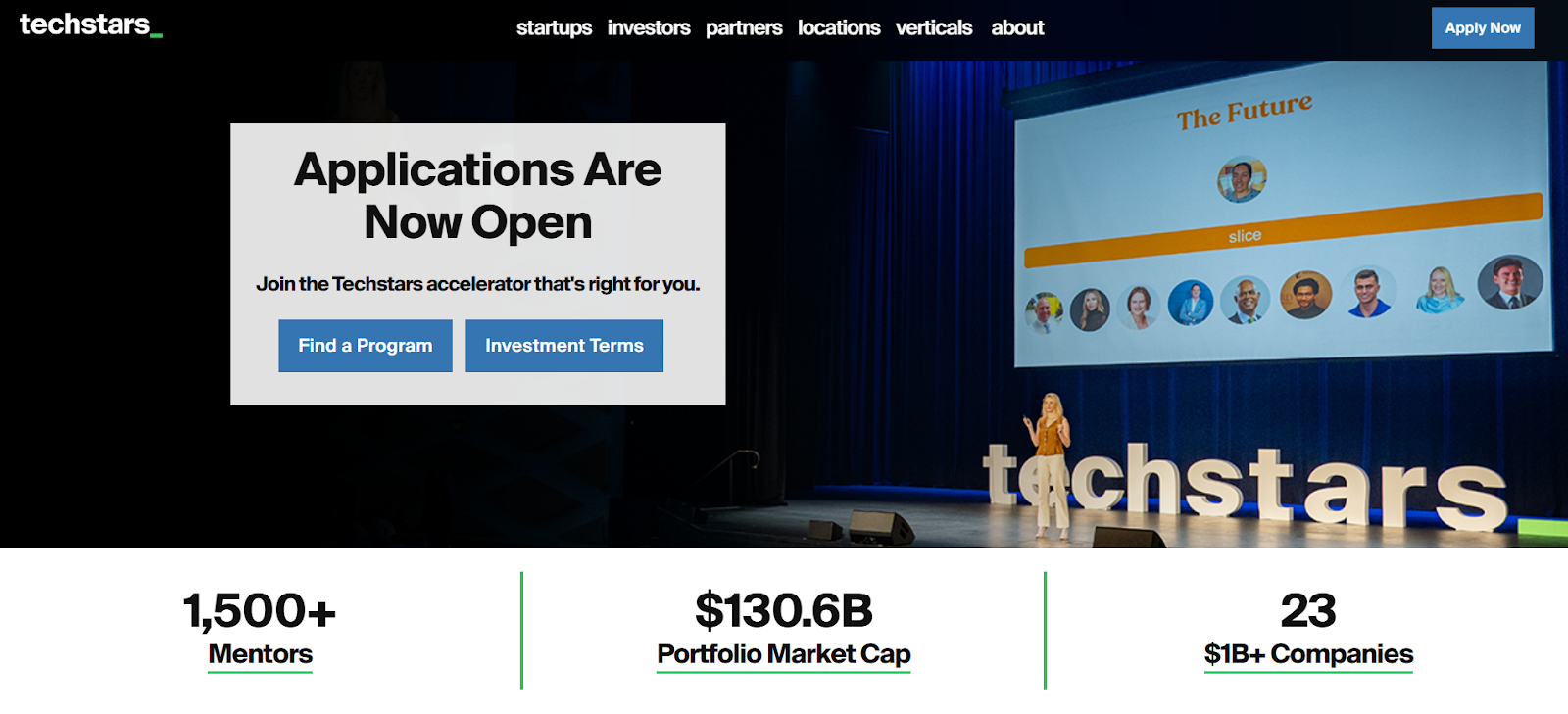
Techstars has evolved into a hyper-regional powerhouse. In 2026, they operate a hybrid model of city-based accelerators (Berlin, New York, London) and the "Founder Catalyst" virtual pre-accelerators.
- The deal: traditionally $120,000 ($20k for 6% equity and an optional $100k convertible note).
- The edge: their mentor-driven model is unparalleled. For startups in ConstructionTech, Field Operations, or other industries requiring heavy integration, the Techstars network provides direct access to enterprise pilots that are otherwise gated.
3. 500 Global (formerly 500 Startups)
Focusing heavily on "Eurasia" and the "MENA" region in 2026, 500 Global is the go-to for startups aiming for international expansion. For those in FinTech and MarTech, 500 Global is among the top startup accelerators for tech companies aiming for rapid international expansion.
- The deal: typically ~$150,000 for 6% equity, though terms vary by region.
- The reality: 500 Global is known for its "Growth Marketing" DNA. For founders who have mastered the "growth" side through the program but find their legacy MVP is buckling under new traffic, the post-program priority is almost always a platform modernization or a migration to a more scalable architecture.
The best accelerators for startups globally
By March 2026, the global accelerator landscape has matured. Regional powerhouses no longer just copy the YC model; they play to their local strengths — like regulatory expertise in Europe, financial infrastructure in Singapore, and rapid sovereign modernization in the Middle East.
1. Entrepreneur first (EF) – Europe & Asia
EF has solidified its reputation as the "Talent-First" investor. Unlike traditional accelerators, EF recruits individuals before they even have a company.
- The 2026 deal: a stipend for living costs followed by a $250,000 investment for teams that pass their Investment Committee.
- The strategy: EF focuses heavily on the "Bridge to SF," moving successful teams to the Bay Area for their launch phase.
- Technical outlook: because EF teams are often "founder-heavy" but "execution-light," they frequently hit a bottleneck when transitioning from a research-based prototype to a commercially viable product.
2. Station F (F/ai program) – Paris, France
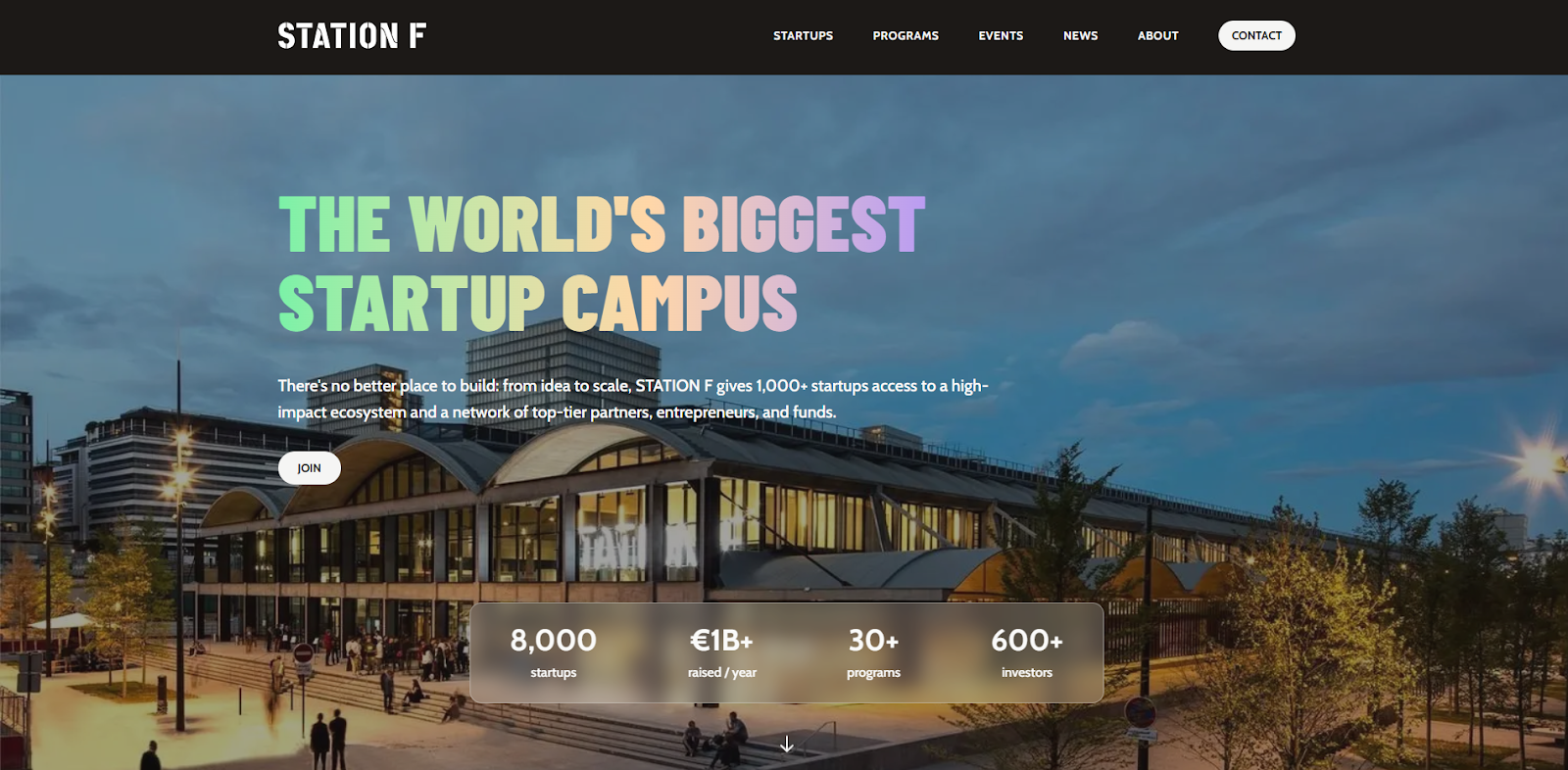
Station F has moved beyond being just a "campus." Their new F/ai program is specifically designed as one of the top startup accelerators for tech companies focusing on AI-native infrastructure.
- The 2026 goal: the program expects startups to hit €1M in ARR within six months.
- The reality: this intense pressure on revenue milestones means there is no room for technical debt. Startups here are increasingly looking for "Senior Squads" who can integrate LLM ops and agentic workflows without the six-month delay of hiring a full-time internal engineering team.
3. Antler (Global / Disrupt)
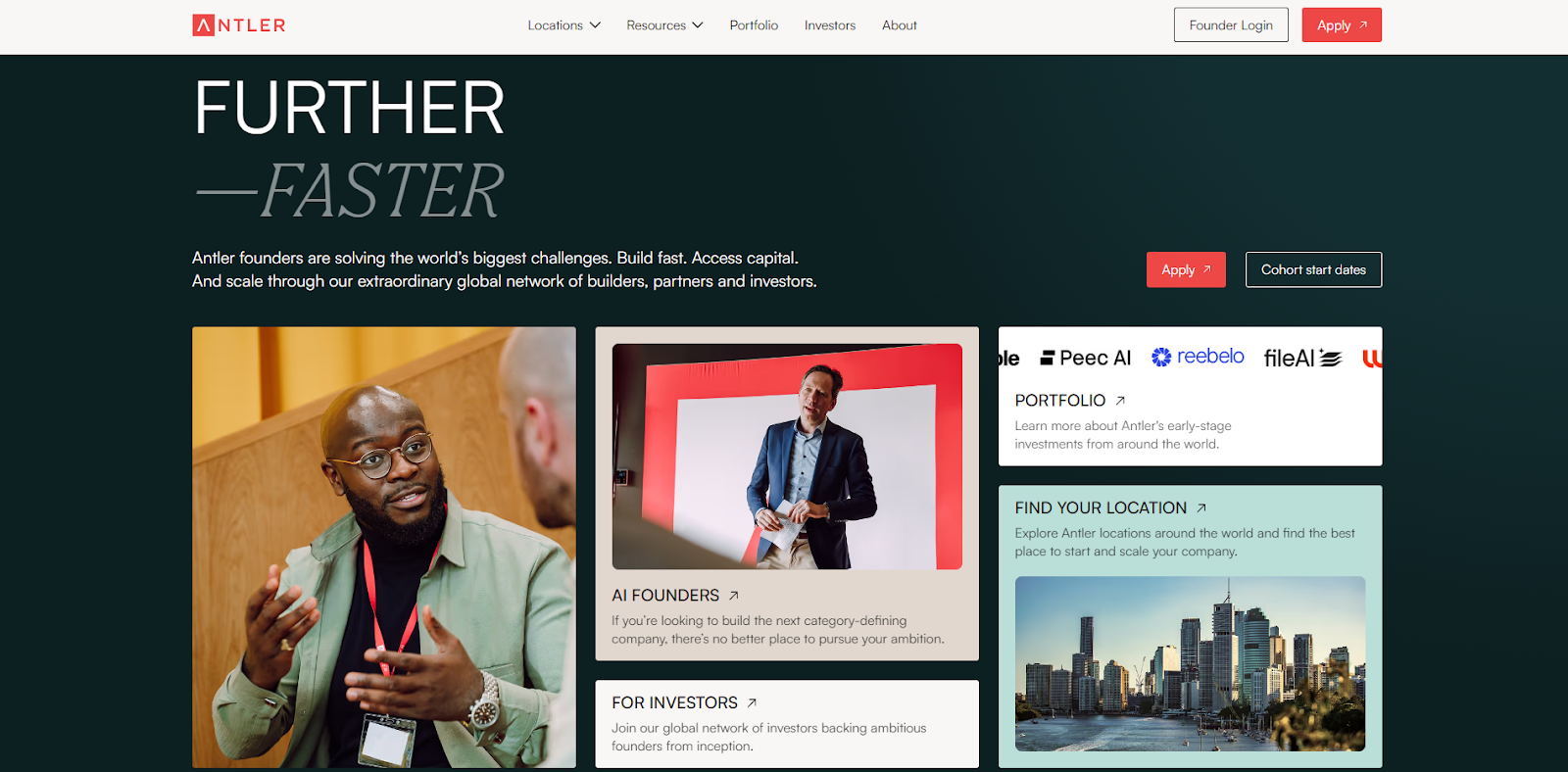
Antler has positioned itself among the top startup accelerators for early stage funding by offering hyper-compressed execution sprints across global hubs. As of early 2026, they offer up to $400,000 in funding ($250k for 10% equity + $150k uncapped SAFE) in a hyper-compressed 4-week sprint.
- Key hubs: Singapore, London, Berlin, and Ho Chi Minh City.
- The edge: they provide over $650k in AI credits (NVIDIA, OpenAI, AWS) from day one. However, credits don't write code. Founders often find themselves "asset-rich" but "talent-poor," and require a technical partner to turn those credits into a scalable architecture.
4. Hub71 – Abu Dhabi, UAE
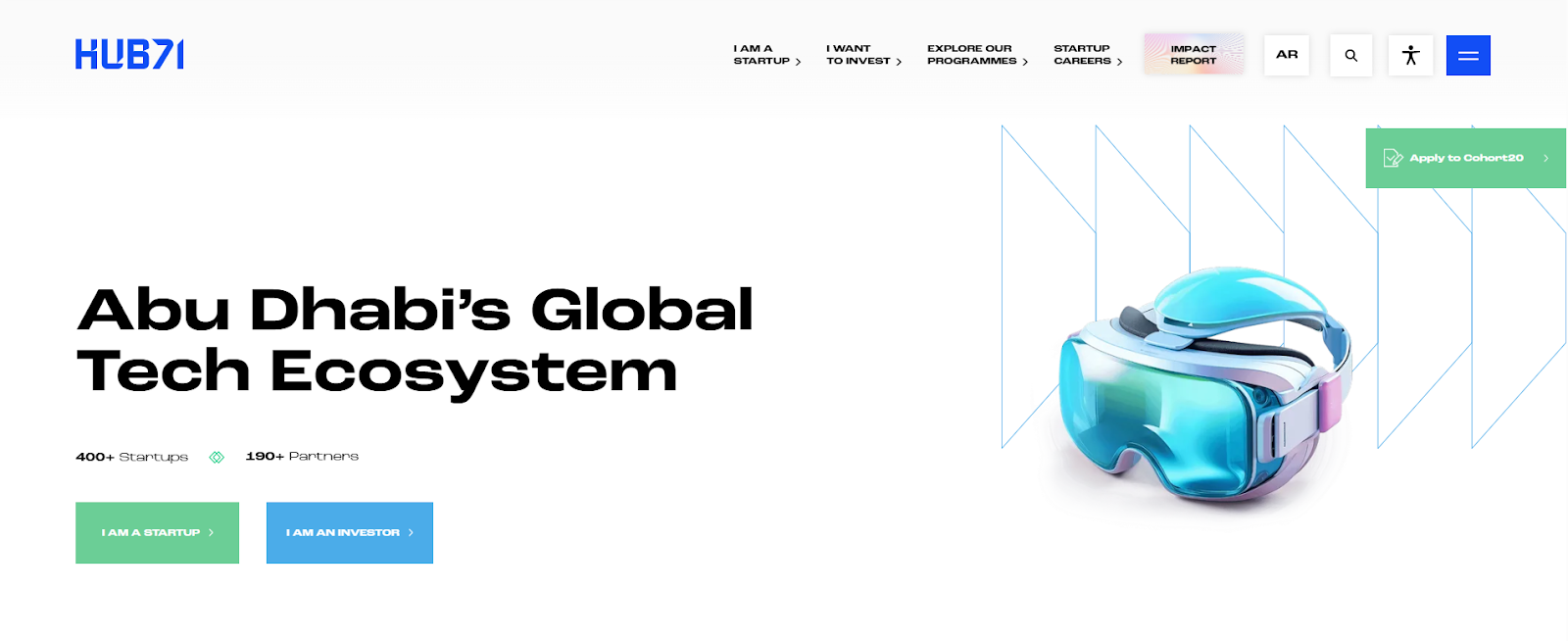
For startups targeting GovTech, FinTech, or ConstructionTech, Hub71 is the definitive gateway to the MENA region.
- The 2026 incentives: their "Access Programme" provides up to AED 500,000 (~$136k) in equity-free incentives and SAFE notes, plus subsidized housing and office space.
- The opportunity: the UAE market demands "Enterprise-Ready" products. For Western startups migrating to the Middle East, the challenge isn't just funding — it's platform localization and modernization to meet the region's strict data sovereignty laws.
Best accelerators for startups in niche industries
In 2026, "Product-Market Fit" has been replaced by "Product-Industry Fit." Investors now prioritize startups that solve deep-rooted inefficiencies in specific legacy sectors. If you are building for the field, the store, or the warehouse, these vertical accelerators offer the specialized advantage you need.
1. ConstructionTech: building the future
The "Built World" is undergoing a massive digital transformation. In 2026, the focus has shifted from simple digitization to Field Automation and Data Intelligence.
- Shadow Ventures (Atlanta, GA): a 9-week intensive focused exclusively on "AEC" (Architecture, Engineering, Construction) considered top-ranked startup accelerators in the US for the AEC sector. They are known for their "No-BS" approach to technical viability.
- Cemex Ventures Leaplab: this is the gold standard for global pilots. Selected startups get a 16-week journey with a real-scale, co-financed pilot in one of Cemex’s 1,500+ global sites.
The technical reality: construction tech requires high-performance mobile apps that work offline in rugged environments. As we saw with our work on Raken, the challenge isn’t just building the app — it’s ensuring the sync logic and field-to-office automation can handle the scale of a Tier 1 job site.
2. MarTech & retail tech: the personalization wave
With the total sunsetting of third-party cookies by early 2026, MarTech startups are pivoting hard toward first-party data and predictive personalization.
- XRC Ventures (New York, NY): XRC is a top-ranked startup accelerator in the US that sits at the intersection of retail and consumer behavior. Their 2026 cohort focuses heavily on "Supply Chain Visibility" and "AI-Driven Customer Experience."
- LVMH La Maison des Startups (Paris, France): Located at Station F, this program offers a direct line to LVMH’s 70+ luxury houses. It is the premier spot for startups building omniretail solutions and personalized customer relationship tools.
NEKLO’s take: most MarTech startups entering these programs have a "functional" prototype but lack a "scalable" enterprise architecture. We help these founders move from a fragile MVP to a platform capable of handling the data load required by a brand like Sephora or Louis Vuitton.
The 2026 selection framework: how to choose
In 2026, the "spray and pray" application strategy is a relic of the past. Top-tier programs now employ AI-driven vetting and technical expert assessments (like the EIC’s new 2026 review process) to filter for startups with genuine architectural depth.
When narrowing down your list, evaluate these four pillars:
1. Capital vs. equity (the dilution math)
Don't be blinded by a $500k headline figure. Look at the long-term impact on your cap table.
- The "standard" SAFE: programs like YC or Antler provide significant capital but require 7-10% equity. This is ideal if you are building a capital-intensive "moonshot" (DeepTech, Biotech, or Sovereign Infrastructure).
- The equity-light/free path: if you are a capital-efficient SaaS or eCommerce brand, 2026 has seen a surge in equity-free programs (e.g., Google for Startups, MassChallenge). These offer the network without the 7% "tax" on your future exit.
2. Technical mentor density
In the AI-first era, general business mentorship is a commodity. You need an accelerator that provides access to platform architects and MLOps experts.
Test them. Does the program have "Design Partners" in your specific vertical? If you’re in ConstructionTech, a program with mentors from general SaaS won't help you navigate the sync-logic challenges of a remote job site. You need industry-specific battle scars.
3. The "post-demo day" ecosystem
The most common mistake founders make is choosing an accelerator for the 3-month sprint and ignoring the "Year 1" reality.
The 2026 reality: 60% of startups experience a "velocity crash" immediately after their program ends because they can't hire senior talent fast enough to meet their new milestones. Choose an accelerator whose alumni network includes reliable technical delivery partners who can bridge that hiring gap.
4. Stage alignment (MVP vs. real product)
By March 2026, most accelerators have stopped accepting "slides-only" startups.
- Seed-stage expectation: you are expected to have a validated MVP with early usage patterns.
- The trap: don't join a high-velocity accelerator if your tech stack is a "spaghetti" MVP held together by hope. The pressure of the program will break a fragile architecture. If you're in this position, your priority should be platform modernization before you step into the intensive spotlight of a cohort.
The post-accelerator roadmap: avoiding the technical debt trap
By March 2026, the "Series A Bridge" has become the most dangerous phase for a startup. Investors are no longer funding "potential"; they are funding predictable engineering capability and architectural stability.
To ensure your accelerator momentum translates into a successful Series A, follow this technical roadmap for the first 180 days post-program.
Phase 1: the "day 121" audit
Most accelerator MVPs are built for speed, not scale. Post-demo day, you must perform a "Technical Debt Audit." In 2026, this specifically focuses on AI infrastructure debt.
The goal is to identify brittle APIs, hard-coded logic, and manual data pipelines that will break under 10x traffic.
Don't ignore the "spaghetti code" to build new features. Allocate 20% of your post-funding capacity to platform modernization. If your internal team is too small to handle both, this is the prime time to bring in a "senior squad" to refactor the core while your founders stay focused on the roadmap.
Phase 2: from "human-in-the-loop" to "agentic automation"
In 2026, a startup's value is tied to its "AI Utility." If your product still relies on manual data entry or basic "GPT-wrappers," it will be commoditized by next quarter.
The goal during this phase is to transition toward vertical workflow automation.
Integrate agentic workflows that understand your specific industry context (e.g., automated field-to-office sync for ConstructionTech or predictive inventory for e-сommerce). This requires a level of senior DevOps and MLOps expertise that is often too expensive to hire full-time at the Seed stage.
Phase 3: implementing the hybrid team model
The most successful 2026 startups avoid the "hiring trap" — the 3-to-6 month lag it takes to find and onboard a senior engineer in a hyper-competitive market.
The strategy here is to keep a lean "core" team (product, architecture, and lead dev) and use dedicated vendors that develop software for startups for heavy lifting and specialized tasks.
This "middle-ground" approach gives you the high-level expertise of a $200k/year senior dev at a fraction of the cost, ensuring your roadmap doesn't slip while you're recruiting your permanent 10-person squad.
Phase 4: preparing for "institutional scrutiny"
As you approach Series A in late 2026, your "technical due diligence" will be rigorous. VCs now use AI-driven code-audit tools to verify security, compliance (SOC 2/GDPR), and documentation.
At this phase you have to ensure "audit-ready" operations.
Move away from "startup chaos" and toward a professional SDLC. Standardize your QA processes and security protocols early. It is much cheaper to build a secure house than to retrofit one after a breach.
Conclusion: velocity is a technical choice
The best startup accelerators give you the fuel, but the quality of your "technical engine" determines how far you’ll go. Whether you are scaling a legacy platform or building an AI-native disruptor, the key to 2026 success is balanced execution.
Don't let your technical debt become a growth bottleneck. If you're coming out of an accelerator and need a senior squad to maintain your velocity, let’s talk about how NEKLO can bridge the gap.


.png)


